Is an Aspirin a Day Good for Your Heart? What the Evidence Now Says
Top EndorsedBASIS Award 202025+ peer-reviewed publications supported6 book projects
Registered pharmacist and medical writer specializing in manuscripts, systematic reviews, pharmacovigilance, regulatory writing and patient education content.

Tap a platform above to view that profile

If you or someone you love might be having a heart attack right now, stop reading and call your local emergency number. Do not take aspirin and wait for the symptoms to pass. Getting emergency help must always come first.
If this is not an emergency, you are probably here for the quieter question that brings most people to this page: does taking aspirin every day really protect your heart, or could it do more harm than good? You are not alone in feeling unsure. The advice really has changed, and that is exactly why it is worth a careful look.
Here is the short answer. Taking aspirin daily is still recommended for many people with atherosclerotic cardiovascular disease (heart or artery disease caused by plaque buildup). But if you have never had cardiovascular disease, the once-daily single dose of aspirin is no longer routinely recommended, because the small chance of preventing a first heart attack or stroke must be weighed against the increased risk of serious bleeding.1 If aspirin was prescribed for you, do not stop it on your own, and let your physician or pharmacist help you decide what is right for you.
How Does a Heart Attack Occur?
A One-Sentence Answer
A myocardial infarction (heart attack) occurs when blood supply to part of the heart muscle is reduced or blocked long enough to cause injury and death of heart muscle cells.2
The key point is that every minute matters. Heart muscle damage progresses while blood flow remains inadequate. The sooner emergency treatment restores blood flow, the more heart muscle may be saved. This is why recognizing the warning signs and seeking emergency care quickly are so important.
The Two Main Steps
(1) Atherosclerotic plaque formation. Most acute coronary syndromes arise from coronary atherosclerosis, the buildup of plaque in the arteries that supply the heart. Over years, plaque containing cholesterol, inflammatory cells, calcium and other substances accumulates within the artery wall.
(2) Coronary thrombus formation. A thrombus is a blood clot that forms inside a blood vessel. When a plaque ruptures or erodes, platelets adhere to the damaged surface, become activated and aggregate. At the same time, the coagulation system produces fibrin, which helps stabilize the growing clot.2
If the thrombus severely narrows or blocks the coronary artery, the affected heart muscle does not receive enough oxygen. This is the most common mechanism of myocardial infarction, but not the only one. Some myocardial infarctions result from other problems, such as coronary artery spasm, spontaneous coronary artery dissection or a mismatch between the heart's oxygen supply and demand.2
Recommended Reading: Hypertension: Definition, Classification and Treatment (↗️)
What Happens When Blood Flow Is Blocked?
As the coronary thrombus grows, it may partly or completely block blood flow. The heart muscle supplied by that artery then becomes ischemic, meaning it does not receive enough blood and oxygen. If ischemia continues, heart muscle cells begin to die and the damage becomes irreversible.2
How Can Aspirin Help Prevent a Heart Attack?
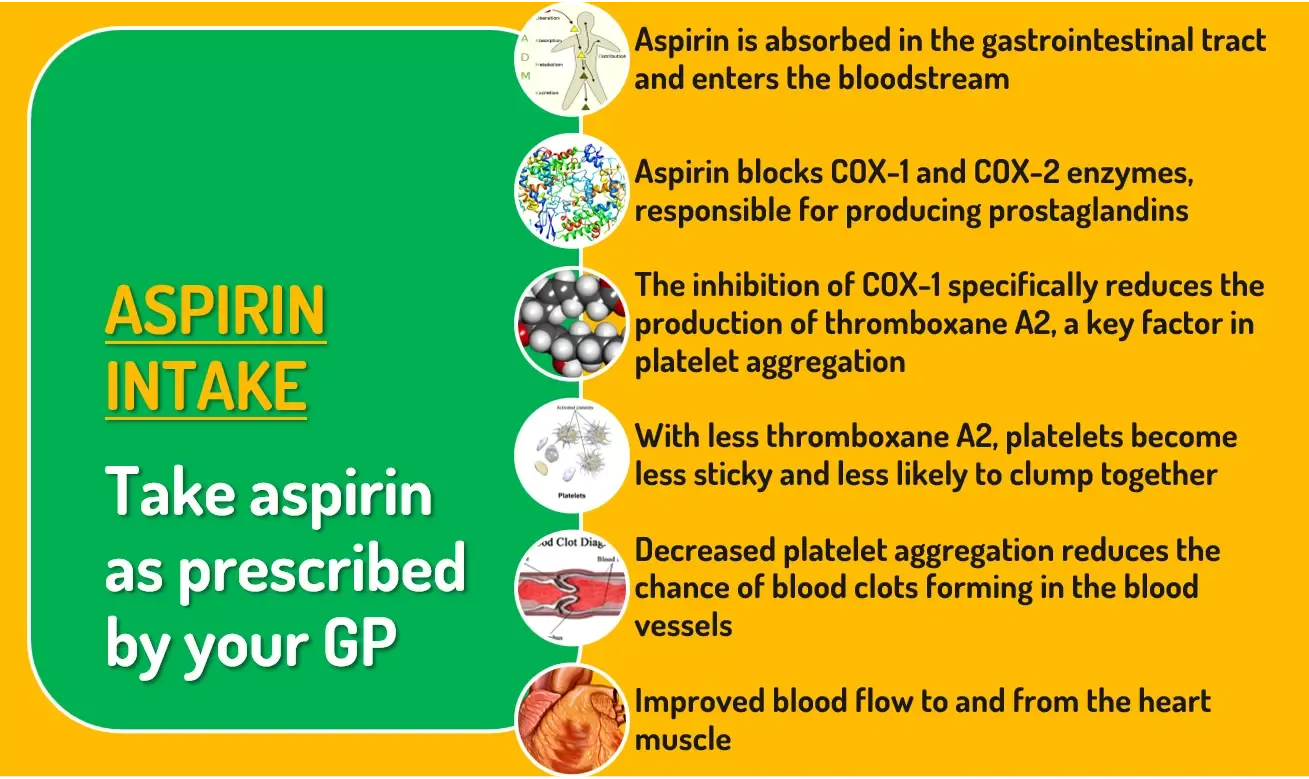
Aspirin acts on the platelet stage of this process. Also known as acetylsalicylic acid, it is an antiplatelet drug that reduces platelet aggregation, making an arterial thrombus less likely to form.3
Aspirin irreversibly acetylates cyclooxygenase-1 (COX-1), an enzyme that platelets use to produce thromboxane A2. Thromboxane A2 promotes platelet activation and aggregation. Because platelets cannot produce new COX-1, aspirin's antiplatelet effect lasts for the remainder of each affected platelet's life span, approximately 7 to 10 days. For long-term prevention of atherosclerotic cardiovascular events, low-dose aspirin usually means 75 mg to 100 mg once daily.3
The same antiplatelet effect that helps prevent an arterial thrombus also increases the risk of bleeding. It can make an existing ulcer or other injury in the gastrointestinal tract bleed more easily. Aspirin also reduces the production of prostaglandins that protect the stomach lining, making the stomach more susceptible to irritation and bleeding. For this reason, long-term aspirin use requires careful assessment of cardiovascular benefit and bleeding risk.3
Should I Take Aspirin During a Suspected Heart Attack?
If you think you or someone with you may be having a heart attack, you may feel frightened or unsure what to do first. Call your local emergency number immediately. Do not take aspirin and wait to see whether the symptoms improve. Emergency assessment and treatment should not be delayed.4
Aspirin may be used as first aid for acute chest pain, but it does not replace emergency care. Call emergency medical services first. Current American Heart Association and American Red Cross guidance states that a first aider may then encourage an alert adult with nontraumatic chest pain to chew and swallow 162 mg to 325 mg of aspirin, unless the person has a known aspirin allergy or has been advised by a health care professional not to take aspirin. If there is any uncertainty, wait for emergency medical services.4
Do not take aspirin on your own for a suspected stroke. Some strokes are ischemic, which means they are caused by an obstructed blood vessel. Others are hemorrhagic, which means they are caused by bleeding in the brain. Aspirin can worsen a hemorrhagic stroke. Call your local emergency number and wait for emergency medical assessment.5
Should I Take Aspirin Every Day?
Advice on daily aspirin has changed, which explains why you may have heard conflicting recommendations. The right answer depends on whether you are using aspirin for secondary prevention or primary prevention.
Secondary prevention means preventing another cardiovascular event in someone who already has atherosclerotic cardiovascular disease. Low-dose aspirin is recommended for many people with chronic coronary disease who do not need an oral anticoagulant, which is a medicine that reduces blood clotting.6 However, treatment is not the same for everyone. Some people need aspirin plus a P2Y12 inhibitor, which is another type of antiplatelet drug, for a limited period after an acute coronary syndrome or coronary stent. After an ischemic stroke, the choice of aspirin, another antiplatelet drug or an anticoagulant depends on the cause of the stroke.7 If aspirin has been prescribed for you, do not stop it without medical advice.
Primary prevention means taking aspirin to prevent a first heart attack or stroke in someone with no known atherosclerotic cardiovascular disease. In this situation, the potential benefit is smaller and must be weighed against the risk of bleeding.
An updated meta-analysis of 14 randomized clinical trials included 167,587 participants who did not have known atherosclerotic cardiovascular disease. Over a median follow-up of 5 years, aspirin reduced major adverse cardiovascular events, such as cardiovascular death, myocardial infarction or stroke, by approximately 10% relative to no aspirin. It also increased intracranial hemorrhage (bleeding inside the skull) by approximately 33% and extracranial major bleeding (major bleeding elsewhere in the body) by approximately 67%. The authors estimated that approximately 250 people would need to take aspirin for 5 years to prevent one major cardiovascular event. During the same period, one additional major bleeding event would occur for approximately every 200 people treated.1
Because of this evidence, the US Preventive Services Task Force recommends against initiating low-dose aspirin for primary prevention in adults aged 60 years or older. For adults aged 40 to 59 years with an estimated 10% or greater 10-year cardiovascular disease risk, the decision should be individualized because the net benefit is small. These recommendations apply to adults without known cardiovascular disease who are not at increased risk of bleeding.8 The American College of Cardiology and American Heart Association similarly state that low-dose aspirin might be considered for selected adults aged 40 to 70 years who have higher atherosclerotic cardiovascular disease risk but no increased bleeding risk. It should not be used routinely for primary prevention in adults older than 70 years or in anyone with increased bleeding risk.9
If you have been taking aspirin for years, this change in guidance can understandably be confusing. Some people continue to take aspirin for primary prevention even when current guidance does not support it. In a 2024 study of adult outpatients taking aspirin for primary prevention, aspirin use in 46.2% to 58.3% of patients was potentially inconsistent with at least one major guideline.10 This does not mean that everyone in that group should stop taking aspirin immediately. It means that each person should review the reason for taking aspirin with a physician or pharmacist.
The right choice depends on you, not on a general rule. Do not start daily aspirin on your own for primary prevention. Ask your physician or pharmacist to review your cardiovascular risk, bleeding risk, other medicines and preferences before deciding whether aspirin is appropriate.
A common belief is that everyone should start daily aspirin after reaching a certain age. Current evidence shows that age alone is not an indication. For people without known atherosclerotic cardiovascular disease, the small reduction in first cardiovascular events must be weighed against the increased risk of major bleeding.1,8
Who Should Avoid Daily Aspirin Therapy?
Some health conditions and medicines increase the risk of bleeding with aspirin. Speak with your physician or pharmacist before starting daily aspirin if any of the following apply to you:8,9
- A history of peptic ulcer disease (ulcers in the stomach or duodenum) or previous gastrointestinal bleeding
- A bleeding disorder, thrombocytopenia (a low platelet count) or recent major bleeding
- Chronic kidney disease or clinically significant liver disease
- Uncontrolled hypertension (high blood pressure)
- Regular use of other medicines that increase bleeding, such as anticoagulants (blood thinners) or other nonsteroidal anti-inflammatory drugs (NSAIDs)
- Aspirin allergy or aspirin-exacerbated respiratory disease, which involves respiratory reactions to aspirin or other nonsteroidal anti-inflammatory drugs
- Heavy or frequent alcohol use
- Being older than 70 years and considering aspirin for primary prevention for the first time
If you have diabetes or chronic kidney disease, the decision requires particular care. Having diabetes does not automatically mean you should take aspirin. The 2026 American Diabetes Association Standards of Care state that aspirin may be considered for primary prevention in adults with diabetes who have increased cardiovascular risk, but only after the possible cardiovascular benefit has been weighed against a similar increase in bleeding risk.11 Evidence in chronic kidney disease remains uncertain. A 2024 meta-analysis found fewer major cardiovascular events but more major bleeding in randomized trials. When observational studies were added, neither association remained statistically significant.12
What Are the Risks of Taking Aspirin?
If you take aspirin every day, it helps to know which adverse effects to watch for. The most important adverse effect is bleeding because aspirin inhibits platelet aggregation and makes clot formation more difficult. Aspirin can also cause dyspepsia (indigestion) and contribute to peptic ulcer disease.3,13
The absolute risk of serious bleeding differs from person to person. It is higher in older adults and in people with a history of peptic ulcer disease, previous bleeding, uncontrolled hypertension, chronic kidney disease or medicines that increase bleeding risk. The most serious bleeding may occur in the gastrointestinal tract or inside the skull.8,9
Possible adverse effects of daily aspirin include:
- Dyspepsia (indigestion), stomach discomfort or heartburn
- Nausea and, less often, vomiting
- Easy bruising and epistaxis (nosebleeds)
- Peptic ulcers (ulcers in the stomach or duodenum)
- Gastrointestinal bleeding, which may cause hematemesis (vomiting blood), blood in the stool or melena (black, tarry stools)
- Hematuria (blood in the urine)
- Allergic reactions, which can include hives, swelling or breathing difficulty
- Tinnitus (ringing in the ears), usually at higher doses and usually reversible when the dose is lowered
Seek urgent medical help if you notice black, tarry stools, blood in your stool, vomit that contains blood or resembles coffee grounds, a sudden severe headache, new weakness or numbness on one side of the body, difficulty speaking or any other symptom of major bleeding or stroke. Do not wait to see whether these symptoms resolve on their own.
Final Takeaways
- Most heart attacks occur when a coronary thrombus forms over a disrupted atherosclerotic plaque and reduces blood flow to part of the heart muscle.
- Aspirin reduces platelet aggregation (clumping), but the same effect increases the risk of bleeding.
- If you have atherosclerotic cardiovascular disease, aspirin may be part of your secondary prevention plan. Do not stop prescribed aspirin without medical advice.
- If you have no known atherosclerotic cardiovascular disease, do not start daily aspirin on your own. The US Preventive Services Task Force recommends against initiating it for primary prevention in adults aged 60 years or older.
- For acute chest pain, call your local emergency number first. While you wait, aspirin may be appropriate if you are alert and have no known contraindication, which means no medical reason to avoid it, but wait for emergency services if you are uncertain. Do not take aspirin on your own for a suspected stroke.
In short, the decision to take aspirin every day should be based on your medical history, cardiovascular risk and bleeding risk, not on age alone or general advice. Daily aspirin is not right for everyone. It remains an important antiplatelet drug for many people with atherosclerotic cardiovascular disease. For primary prevention, the potential benefit is small and must be weighed against the risk of major bleeding. Talk with your physician or pharmacist before starting or stopping aspirin.
Written and medically reviewed by Imtiaz Ibne Alam, RPh, a registered pharmacist and medical writer. If you run a health, pharma or wellness brand and need accurate, evidence-based content like this, take a look at my medical writing services.
YOU MAY ALSO LIKE READING THESE ARTICLES:
- How does the Human Body Cardiovascular System Work?
- What Are Analgesics and How Are They Classified?
- When and Who Should Take Vitamin and Mineral Supplements?
- Polycystic Ovary Syndrome: Causes, Symptoms and Home Remedies
- Irritable Bowel Syndrome: Causes, Symptoms and Treatment
References
- Laferrière C, Moazzami C, Belley-Côté E, et al. Aspirin for the primary prevention of vascular ischemic events: an updated systematic review and meta-analysis to support shared decision-making. CJC Open. 2023;5(12):881-890. doi:10.1016/j.cjco.2023.08.011
- Rao SV, O'Donoghue ML, Ruel M, et al. 2025 ACC/AHA/ACEP/NAEMSP/SCAI guideline for the management of patients with acute coronary syndromes: a report of the American College of Cardiology/American Heart Association Joint Committee on Clinical Practice Guidelines. Circulation. 2025;151(13):e771-e862. doi:10.1161/CIR.0000000000001309
- Patrono C. Low-dose aspirin for the prevention of atherosclerotic cardiovascular disease. Eur Heart J. 2024;45(27):2362-2376. doi:10.1093/eurheartj/ehae324
- Hewett Brumberg EK, Douma MJ, Alibertis K, et al. 2024 American Heart Association and American Red Cross guidelines for first aid. Circulation. 2024;150(24):e519-e579. doi:10.1161/CIR.0000000000001281
- American Heart Association. Aspirin and dual antiplatelet therapy. Reviewed February 28, 2025. Accessed July 12, 2026. https://www.heart.org/en/health-topics/heart-attack/treatment-of-a-heart-attack/aspirin-and-heart-disease
- Virani SS, Newby LK, Arnold SV, et al. 2023 AHA/ACC/ACCP/ASPC/NLA/PCNA guideline for the management of patients with chronic coronary disease: a report of the American Heart Association/American College of Cardiology Joint Committee on Clinical Practice Guidelines. Circulation. 2023;148(9):e9-e119. doi:10.1161/CIR.0000000000001168
- Kleindorfer DO, Towfighi A, Chaturvedi S, et al. 2021 guideline for the prevention of stroke in patients with stroke and transient ischemic attack: a guideline from the American Heart Association/American Stroke Association. Stroke. 2021;52(7):e364-e467. doi:10.1161/STR.0000000000000375
- US Preventive Services Task Force; Davidson KW, Barry MJ, Mangione CM, et al. Aspirin use to prevent cardiovascular disease: US Preventive Services Task Force recommendation statement. JAMA. 2022;327(16):1577-1584. doi:10.1001/jama.2022.4983
- Arnett DK, Blumenthal RS, Albert MA, et al. 2019 ACC/AHA guideline on the primary prevention of cardiovascular disease. Circulation. 2019;140(11):e596-e646. doi:10.1161/CIR.0000000000000678
- Chipalkatti N, Barnes GD, Bashaw L, et al. Guideline concordance of aspirin use for primary prevention in adult outpatients. Blood Adv. 2024;8(24):6207-6214. doi:10.1182/bloodadvances.2024014220
- American Diabetes Association Professional Practice Committee for Diabetes. 10. Cardiovascular disease and risk management: Standards of Care in Diabetes-2026. Diabetes Care. 2026;49(suppl 1):S216-S245. doi:10.2337/dc26-S010
- Bellos I, Marinaki S, Lagiou P, Benetou V. Aspirin for the primary prevention of cardiovascular diseases in patients with chronic kidney disease: an updated meta-analysis. Am J Cardiovasc Drugs. 2024;24(2):241-253. doi:10.1007/s40256-024-00630-y
- National Library of Medicine. Aspirin. MedlinePlus. Updated November 15, 2025. Accessed July 12, 2026. https://medlineplus.gov/druginfo/meds/a682878.html
⚠️ Disclaimer: The information provided in this article is for educational purposes only and should not be considered as medical advice. Please consult a healthcare professional for personalized advice.
