


What are Neurons?
The human body is made up of around 30 trillion cells, with over 200 different cell types. Each type of cells have their own structure and function. Of these, some perform distinctly specialized tasks in the body system.
In the nervous system, cells specialized in receiving, transmitting and processing nerve impulses to and from the brain are known as neurons. They are the basic structural and functional units of the brain and serve as the core component of the communication system in the human body
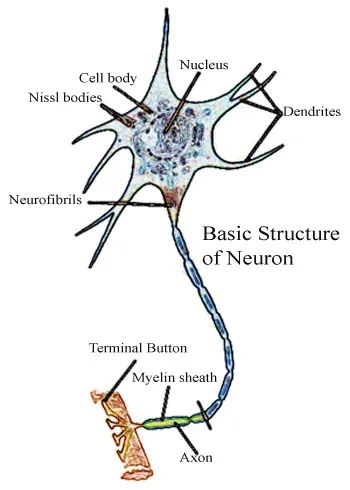 Each neuron processes and transmits information in both chemical and electrical forms. They receive electric signals from all parts of the body and translate these signals into specific neurotransmitters and deliver these neurotransmitters to target cells.
 Structurally, similar to the other cells in the body, a neuron generally consists of a nucleus, mitochondria, golgi bodies, cytoplasm and cell membrane.
However, most neurons have three distinct parts:
- A cell body
- An axon
- Multiple dendrites
Classification of Neurons
Neurons are classified by many different criteria.According to the functions of neurons, they can be classified into two types:
- Sensory or Afferent Neurons. They carry sensory information from tissues and organs to the nervous system.
- Motor or efferent Neurons. They transmit nerve impulses from the nervous system to the effector cells in the body.
- Unipolar Neurons. They have a single, short process that includes both the axon and dendrite (e.g. dorsal root ganglion neurons). They are exclusively sensory neurons and serve to transmit general sensation.
- Bipolar Neurons. They have two processes, the axon and a single dendrite. They are not very common in the human body, and found mostly in the olfactory epithelium and inner nuclear layer of retina.
- Multipolar Neurons. They have more than two processes, a single axon and two or more dendrites (e.g. pyramidal cell of cerebral cortex). They are common and have an extensive dendrite tree.
