Myths and Facts about Herbal Medicines

Today, many of us believe that herbal medicines are safe and effective for health. In addition, many of us also believe in several myths about herbs. However, according to recent studies, several issues are associated with safety and effectiveness of these medicines. Accordingly, I want to discuss in this post about the myths and facts of herbal medicines.

Herbal Medicine

Herbal medicine can be described as the medical knowledge practice that uses herb or herb extracts for therapeutic purposes. In addition, these medicines include herbs, herbal preparations, herbal materials and finished products containing parts of plants or other plant parts as main constituents. This medical practice is also known as "natural medicine", "phytomedicine", "botanical medicine" and "traditional medicine".

Myths and Facts Related to the Common Misconceptions

Several myths and facts are related to the common misconceptions about herbal medicines. Among these misconceptions, some are summarized below.

1. Many of us still believe that herbs are not drugs, it's natural. In addition, many people also believe that medicines, which are prepared from herbs or herbal extracts, must possess magical therapeutic properties with no side effects.
2. Most of the herbal companies advertise that herbal products are organic, for this reason they possess superior therapeutic benefits than laboratory-produced medicines. In addition, they also advertise their products as natural with no undesirable side effects.
3. These medicines are OTC (over the counter) products in most of the countries, and there are no strict guidelines for the preparation and administration of these products.
4. Still limited scientific studies have done to evaluate the safety and effectiveness of these medicinal products.

As a result, many consumers are not concerned about the adverse effects of herbal medicines. Consequently, they still have misconceptions about herbal products and still prefer these medicines rather than modern allopathic medicines.

You might also like these posts:
Are Herbal Medicines Safe for Health?
Role of Traditional Medicine in Human Society
What are Herbal Remedies?

Why Vitamin and Mineral Supplements Are Essential to Your Body?

Picture of supplements
Vitamin and mineral plays an essential role to the human body. Although, you can easily get these minimum required substances from your daily food intakes with a balanced diet, but for some reasons you may need vitamin and mineral supplements. Accordingly, in this post, I want to discuss who needs these supplements and why these substances are essential for you.

Who Needs Dietary Supplements?

If you are normally healthy and consume a variety of nutritional foods, including vegetables, whole grains, fruits, lean meats, fish and fiber containing products, you do not need to take nutritional supplements. However, if you are unable to fulfill your daily necessities of vitamins and minerals from your daily calorie intakes, vitamin and mineral supplements may be beneficial for you to get proper nutrients.

In addition, according to mayoclinic, if you consume less than 1,600 calories per day or you are a vegetarian and only consume meals with limited variations, you may need those extra supplements. Alternatively, age also plays another significant role for creating these requirements of supplements. If you are older than fifty years, your body may lose the ability to absorb the vitamins like B12 from your daily meals. As a result, you may need to take dietary supplements containing vitamin B complex to fulfill the nutritional requirements of your body.

On the other hand, these supplements are necessary in several other health or medical conditions. As an example, iron supplements help to overcome heavy bleeding during the menstrual period of women.

Why Vitamins and Minerals Are Essential to Your Body?

Essentially, vitamins and minerals accelerate our usual growth and development, enhance the immune system, and help our organs and cells to work appropriately. In fact, vitamins and minerals aid to keep your body healthy and stronger. According to most recent Dietary Guidelines, you need to have vitamins and minerals in your regular diet, because the deficiencies of vitamin and mineral can lead you to several nutritional disorders like osteomalacia, kwashiorkor, marasmus, mental retardation, growth retardation, keshan disease, pellagra, goiter, anemia, rickets, tetany etc.As an example, you may know that potent antioxidant Vitamin E is one of the essentially required antioxidants for our body. According to Dietary Guidelines, the average required dose of vitamin E in adults is only 15 IU (International Unit) per day. However, you need to know that the Vitamin E deficiency can cause you skeletal muscle, pigmental retinopathy, and hemolytic anaemia like diseases. In addition, according to recent studies, the deficiency of Vitamin E also plays a key role for baldness (androgenic alopecia).

Role of Traditional Medicine in Human Society

The Traditional medicines are playing an important role in human society from the past centuries. Traditional medical practice illustrates the medical knowledge practices, which improved more than centuries ago within a variety of societies before the era of modern Allopathic or Homeopathic medication begins. Ayurvedic medicine, traditional Chinese medicine, Unani, herbal, African Yoruba Ifa, Muti as well as many other ancient medical practices from all over the world included in these medicines.

Historically, at the end of the twentieth century, a number of traditions came to dominate the practice of traditional medicine. Among all, the herbal medicine system of Ancient Greek and Ancient Roman sources, the Ayurvedic medicine system from India, traditional Chinese medicine, Unani-Tibb medicine and Shamanic Herbalism were the most dominant at the end of the twentieth century.

Key Contributions to Modern Medicines

The fundamental concepts of Modern allopathic medicine have developed from traditional (Unani and Ayurvedic) medicines.
About fifty-five percent of present Allopathic or Homeopathic medications, which are using in the world, derived from plant or herb sources.
Roughly 40% of plants provide active ingredients for modern drugs or medicines, and because of their use in traditional medicines, they came to the interest of researchers.
More than 120 active ingredients presently isolated from the medicinal herbs.
More than 8,000 active ingredients in the present pharmacopoeias extracted from plant sources.

Who Uses Traditional Medicine?

Among non-industrialized societies, the use of herbs to heal disease is almost universal. Peoples from countries in Latin America, Asia, and Africa are still using herbal products to fulfill their regular health related necessities. As an example, nearly 75-80 percent of the population in Africa uses traditional medicine to fulfill their basic health related necessities. Another attention-grabbing thing is that presently, in United States, up to 158 million peoples use complementary medicines in their primary health related necessities.

Which Discipline Studies Traditional Medicines?

Ethnobotany, ethnomedicine, and medical anthropology have included as the basic disciplines, which study these medicines.

Present Status of Traditional Medicines

In recent years, the use of drugs or medications as well as search for new drugs and dietary supplements derived from traditionally used plant sources have accelerated much. As a result, many researchers are studying and investigating on herbal remedies to find out the proper remedial uses along with pharmacological effects.

Safety Issues

Moreover, according to WHO (World Health Organization),Over hundreds of countries have regulatory systems for herbal medicinal products. However, WHO also warns that the scientific data from experiments done to analyze the safety and efficiency of traditional or herbal medicinal products and practices is insufficient. As a result, WHO recommends consulting with physicians before taking these medicines.

Read my article Are Herbal Medicines Safe for Health? to know more about the safety issues.

Are herbal medicines safe for health?

Many people have a common misperception that herbal medicines or herbs are not only safe for health, but also herbal side effects are nil. However, is that so? In reality, after researching on these medicines, I just found that the real fact is something else. Although, in many cases, it seems that herbs are beneficial for health, but most of these cases don't ensure the safety and effectiveness of herbs. Accordingly, I want to discuss in this article concerning the real facts of herbal medicines.

What is herbal Medicine?

Herbal or botanical medicine is a type of medicinal practice that is based on the exercise of herbs and herb extracts. This medicinal practice is the oldest but most widely used in all cultures and societies. In addition, herbal medicine is also known as “traditional medicine”, “botanical medicine”, “phyto medicine” and “natural medicine”.

Why People Have Misperceptions About Herbal Medicines?

In fact, after reviewing several forums on this medical practice, I found that there are several interesting reasons for having misperception.
Firstly, many still people believe that herbs are safe for heath and if a remedy came from herbs or herb extracts, it must be harmless and safe.
Secondly, most of the manufacturer of these medicines advertises their products as natural substances and they also advertise that herbal possess no side effects.
Thirdly, in many countries, most of these medicines are available as OTC (over the counter) product, and there are no strict guidelines for the preparation and administration of these products.
Finally, the safety and effectiveness of these medicinal products are not ensured to common people.


Why Use of Herbal Medicine Could Be Harmful to You?

If you are thinking of taking herbal medicines, it is necessary for you to know that these products can cause risky and serious side effects to the user's body. According to a published article of World Health Organization (WHO), herbal side effects are often caused if:
  • the herbal remedy is administered inappropriately
  • administered in combination with other medicines
  • the therapy or product lacks desired quality.
In addition, according to several studies, many of these medicinal products can cause dangerous drug-drug interactions with modern allopathic medicines as well as with other herbal remedies. Further, these herb-drug interactions could alter the efficacy and bioavailability of the prescribed medications.
Moreover, you need to know that, with only a few exceptions, most of these medicines are not experimented for safety and effectiveness through clinical trials or studies. As a result, many researchers said that herbal medicines could cause serious side effects. In addition, according to the scientific and medical community, these medicines may danger the life or well-being of the consumer when administered instead of allopathic medicines.
In conclusion, you need to know that WHO recommends consulting with physicians before taking herbal remedies. Because, you need to make sure that the medicine or herb you are taking into consideration is safe for use, or will not cause any side effects and safe to use in combination with other allopathic drugs.

The First Actos Lawsuit over Bladder Cancer Filed

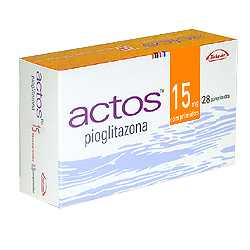
Thousands of Actos lawsuits over bladder cancer are likely to be filed in the federal courts by patients who were used to with the diabetes medication, and hundreds of Actos lawsuits are already following leading anti-diabetic drug manufacturer Takeda Pharmaceuticals, according to Associated Press.

This impending flood of filing Actos lawsuits in several states of America began, when the US-FDA issued a warning about Actos and bladder cancer in June 15, 2011. This FDA safety announcement informed public and healthcare professionals that use of Actos for more than a year might lead patients to greater risk of developing bladder cancer. For this announcement, FDA reviewed data from a five-year analysis of an ongoing ten-year epidemiological study. In addition, this review showed that patients who were taking Actos for longer than 12 months developed the risk of bladder cancer up to 40% compared to patients who never being exposed to Actos.

After this safety announcement from FDA, in August 2011, the first Actos lawsuit over bladder cancer was filed against the manufacturer (Takeda Pharmaceuticals) and co-marketer (Eli Lilly Pharmaceuticals) on behalf of a woman named Nancy Rios, 54, and she filed her Actos lawsuit due to recurrent bladder cancer. She stated that she was using this drug to aid in type II diabetes mellitus for more than a decade, and first diagnosed with cancer in 2009. In her lawsuit, she also stated that she had her second operation to remove bladder tumors in June, and she was anxious that she might lose her bladder.

She alleged that both the manufacturer and co-marketer are legally responsible for improperly warning patients and doctors about the possible risk of developing bladder cancer with Actos.

However, this suspected drug of Takeda pharmaceuticals got approval from the US-FDA in July 15, 1999, and soon after approval, Actos became one of the highly recommended drugs by physicians due to its cardiovascular safety profile as compared with its class member Rosiglitazone (Avandia).

According to Associated Press, when another popular drug of type II diabetes mellitus (Avandia) was restricted in U.S. market and withdrawn from Europe for developing the increased risk of heart attacks, Actos became the no. one diabetes pills in terms of diabetes medication sales. Despite, On August 14, 2007, the US-FDA informed that all the Pioglitazone containing products (Actos, ACTOplus met, ACTOplus met XR, and duetact) of Takeda Pharmaceuticals might cause or exacerbate congestive heart failure, but it didn’t affect on sales of Actos. In addition, the sales of Actos mounted from roughly $2.9 billion in 2006 to over $4.3 billion previous year.

Nevertheless, the huge sales of Actos jump down this year when the two European country France and Germany suspended sales of the drug in their market. This decision was based on the results of an epidemiological study. The epidemiological study followed approximately 155,000 Actos users over a three-year period between 2006 and 2009, and the study found an increased risk of bladder cancer with the long-term use of the medication.

These articles might also interest you:

Popular Diabetes Drug Actos linked to Increased Risk of Bladder Cancer
France and Germany Suspended Use of Actos for Bladder Cancer Risk
Increased Risk of Bladder Cancer Puts Actos in Legal Challenges
Actos Lawsuit -- Actos bladder cancer Litigation

Story about this post:

This particular post on actos bladder cancer was written while I was in a contractual project with PH Law Firm. Based in Seattle, Washington, this law firm is specialized in handling personal injury and wrongful death cases.

France and Germany Suspended Use of Actos for Bladder Cancer Risk

In June 2011, Actos (Pioglitazone HCl), the most widely prescribed diabetes medication in the world was suspended by the drug regulators of both France and Germany due to the increased risk of bladder cancer with the medication.

This suspension was based on the results of an epidemiological study conducted by the French National Health Insurance. According to the results of the epidemiological study, the French agency found that patients, who were taking Actos for a long time to aid in type 2 diabetes mellitus, significantly increased risk of bladder cancer compared with patients who were taking other diabetes medications.

The regulators of both two European countries also suggested that patients who were prescribed Actos should continue taking the drug until their physicians recommends other alternative drug, because sudden stop of treatment could be dangerous for their health.

On the other hand, the U.S. Food and Drug Administration (FDA) and the European Medicines Agency (EMA) still permitted the manufacturer to continue sales of the medication until further review of data about Actos bladder cancer risk completed. However, the FDA informed healthcare professionals to stop prescribing Actos in patients who already have active bladder cancer, and exercise caution in patients with previous record of bladder cancer.

The French epidemiological study followed approximately 1.5 million patients around a period of three years between 2006 and 2009, and they found an adjusted hazard ratio of 1.22 for bladder cancer risk. The results of this study also illustrated hazard ratio for cumulative dose and longest exposure with the drug. An adjusted hazard ratio of 1.75 was found in patients with the cumulative dose greater than 28,000 mg, and patients with longest exposure (more than a year) of the drug showed a hazard ratio of 1.34. However, the study indicated a significantly increased bladder cancer risk in males (Hazard Ratio [HR] 1.28) compared with females.

Following the results of the study, the Agency for the Safety of Health Products of France first suspended sales of Actos in their market on June 9, 2011. After the announcement of AFSSAPS, on June 10, 2011, the Federal Institute for Drugs and Medical Devices of Germany announced to follow suit with the results of the French study. The German federal agency recommended that physicians should not prescribe Actos to the new patients until further clarification about Actos bladder cancer risk released.

Shortly after the suspension from the two giant European country, on 15th June 2011, based on the data of a five-year short-term analysis from a planned ongoing ten-year epidemiological study, the US-FDA informed public and healthcare professionals that the use of Actos for longer than 12 months might increase the risk of bladder cancer in patients.

Although, the US-FDA didn’t ban Actos from the U.S. market, but the agency recommended addition of the Actos bladder cancer risk in the labeling and patient medication guide of Actos. Nevertheless, this information will warn patients about the possible risk of developing bladder cancer with the drug.

You might also like these related articles:

Popular Diabetes Drug Actos linked to Increased Risk of Bladder Cancer
The First Actos Lawsuit over Bladder Cancer Filed
Increased Risk of Bladder Cancer Puts Actos in Legal Challenges
Actos Lawsuit -- Actos bladder cancer Litigation

Story about this post:

This particular post on actos bladder cancer was written while I was in a contractual project with PH Law Firm. Based in Seattle, Washington, this law firm is specialized in handling personal injury and wrongful death cases.
Bloggers.com